
The Great Max Pemberton Myth?
Updated: Sep 1
Channel 4’s “The Great ADHD Myth?” is promoting the agenda of a fantasist above the medical consensus of every major public health body on the planet. Who is Max Pemberton & why is he so dangerous?
In 1998, Dr Andrew Wakefield published a since-debunked study in The Lancet claiming a link between the MMR jab and autism. Despite this controversy resulting in vaccine scepticism that persists today, a global resurgence of contagious diseases & Wakefield being struck off by the General Medical Council, his fraudulent findings are still being used to inform public health policy in the US. So why then, 28 years later, is a mainstream broadcaster giving a substantially bigger platform to a new media-savvy, but no less dangerous fantasist, in order to peddle fallacies about medication & neurodivergence to the general public?

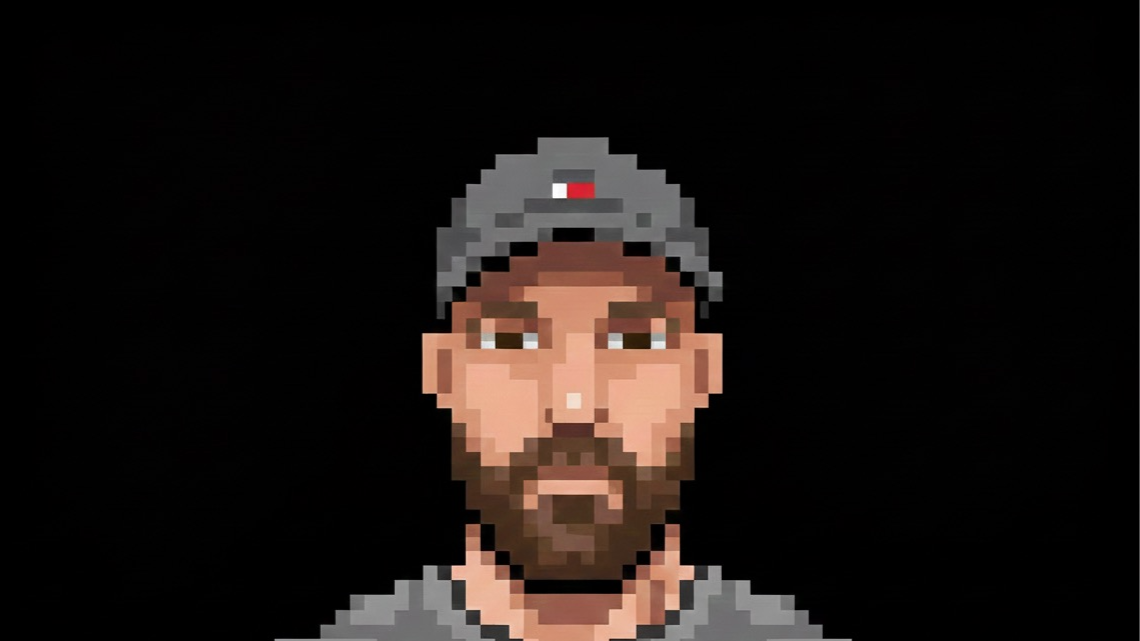
Based on outward appearances, Dr Max Pemberton, the animated host of Channel 4’s “The Great ADHD Myth?”, presents much like an expert on ADHD: he too, has limbs, a torso and a face. But just as there are few discernible physical differences between ADHD brains and those of neurotypical people, decades of research have proven crucial variations in function and performance (an important distinction given short shrift in the show). Continuing with this analogy, ADHD is but a passing acquaintance of Pemberton, whose specialised fields are namely addiction, eating disorders and penning hysterical hit pieces for right-wing tabloids. That this makes him poorly qualified to “challenge conventional thinking around ADHD” on a highly publicised TV show is a level of granularity with which he doesn’t feel it necessary to trouble his viewers.
For those more meticulously minded, some of Pemberton’s recent hyperbolic headlines include: “Why we could all be classed as autistic within a decade”, “TikTok is giving our children Tourette's” and “Why you should never give money to beggars”. That he earns a substantial portion of his income by making controversial claims in the media is a worrying conflict of interest that I have yet to see addressed. Is it any wonder then that Pemberton's first foray into presenting amounts to little more than a hubristic, pseudo-scientific attack on the medical validation of a struggling minority group?
Pemberton’s aversion to fact is established in the opening line of the show: “I’ve been a psychiatrist for nearly 25 years”. Either the word “nearly” is doing some elephantine lifting, or his career path has been so prodigious that, sui generis, he was able to step into the role 18 years prior to his 2019 MRCPsych certification. He goes on to propose that our “current understanding” (read: scientific consensus) of ADHD as a neurodevelopmental disorder is a load of old bollocks, perpetuated by online influencers and the Hollywood elite; instead, he states, it is nothing more than a “social construct”. Perhaps such a polemical take would carry more weight had he not already repurposed the definition of 'highly experienced psychiatrist' into a construct of his own ego.
To stave off scepticism, our host has assembled a mismatched group of “the most respected experts in the field” who all completely agree with his theory. But do they? No. It took less than a day for Katya Rubia, Professor of Cognitive Neuroscience at King’s College London, to withdraw her support for the show. “My interview was hours long, and they cherry-picked the bits that suited their push for presenting ADHD as a myth… Biased programs like this one… are irresponsible and will have detrimental effects.” So far, so bad. Time will tell whether retractions also follow from a retired GP who laments that the DSM5 (which is used to classify mental health conditions in the US) now takes up too much space on her bookshelf… grrrr progress, or a clinical psychologist who likens ADHD medication to slow-release cocaine, which by her own admission “is quite shocking when you use that language.” Yes, yes it is.
At the heart of “The Great ADHD Myth” sits Mason, a ten year old boy who was diagnosed with ADHD two years ago. Medication has helped raise his scores from the twos and threes out of sixty he had been achieving in his schoolwork, to a point that he is now on a par with his peers, but it has also dulled his personality. His mother, torn between her son’s academic success and allowing him to “be himself” without the drugs, agrees to take part in a “carefully monitored experiment to help him come off them”. Alongside abrupt cessation of meds, excessive sugar consumption and screen time are to be replaced with physical activity and more time outdoors for six weeks; that these are already widely recognised as positive adjustments for those with ADHD, medicated or not, does not appear to be worthy of mention.
And so follows a video diary of Mason enjoying himself in nature and playing happily with his family. On conclusion of the six-week trial, Mason’s mum doesn’t want him back on the drugs. That’s good enough for Pemberton! Forget that it’s a sample size of one, no need for a control group, no need to check in with girls with ADHD, women with ADHD, men with ADHD, or [insert intersectional group] with ADHD. This is irrefutable evidence that ADHD is “a social construct, not a disorder of the brain”! There are no conclusions to be drawn from the fact that after filming, Mason’s grades took a nose-dive and he had to resume taking his medication; just stick that little detail in the end credits!
The unparalleled efficiency of this “experiment” leaves substantial airtime to fill. But why waste it on boring old science when our host is the star that Channel 4 has paid for? Thus we’re treated to a brazen stunt in which Max “I’m alright Jack” Pemberton uses his knowledge of the ADHD diagnostic criteria to game his way into a diagnosis and a prescription for lisdexamfetamine (which, spoiler alert: doesn’t help him feel his best… titration, shmitration). Yes he might lose his phone regularly or dislike waiting in queues, but if that’s the extent of Pemberton’s ADHD synonymous problems in life, then he’s doing a damn sight better than: the 20% of us who attempt suicide, or contribute to our vast over-represention within the UK’s prison system, or merely have to contend with common comorbidities such as depression, anxiety and substance abuse. Pemberton’s subsequent sanctimonious mourning for the imaginary version of himself, who has been denied the opportunity to develop his own coping mechanisms for 30 years by Big Pharma, serves as nothing more than a tone deaf “fuck you” to all those with genuine ADHD, who have not been afforded the luxury of obtaining a medical degree, or newspaper columns lucrative enough to purchase a spacious Barbican flat.
Despite the programme’s rigid agenda, there were glimpses of Pemberton almost getting it (if not cynically hedging his bets). Maybe those with ADHD would struggle less if the education system and other societal institutions weren’t geared against them? It’s a fleeting consideration, sacrificed in favour of the contentious.
That Pemberton chose to make this show about ADHD and not any other neurodevelopmental disorder speaks to society’s prevailing attitudes on the issue. Conditions that are difficult to empathise with are largely afforded sympathy. By contrast, the relatability of some ADHD traits (everybody has been late, struggled to focus, or misplaced their keys before) is prone to soliciting unreasonable conclusions that people with ADHD must simply learn to cope better. Pemberton knows this, but exploits it anyway. Would he have had the nerve to parade around on television challenging autistic people to develop better social skills or dyslexic people to study harder?
Yes, Pemberton, in an act of blinding hypocrisy, did join the media mob that interrogated Jason Arday's academic record & hounded him to his death on the day that this article was published... but a Channel 4 documentary invites greater scrutiny than Daily Mail rage bait behind a paywall (here's a link to view it for free).

Channel 4’s lacklustre attempts to defend its irresponsible editorial decisions are also deserving of scorn. Did they bother to check Pemberton's credentials or previous content? Prior to the programme being aired, the broadcaster dismissed concerns raised publicly by the charity ADHD UK, arguing that its remit “which offers a platform for alternative views, stimulating public debate and challenging the status quo” should take priority. In response to The Independent, Channel 4 highlighted “Johnny Vegas: Art, ADHD and Me” as evidence of its commitment to balanced programming on the subject. How reassuring. On the same token, should we anticipate that their coverage of the migrant crisis thus far has paved the way for Tommy Robinson’s “The Great Refugee Myth?” to hit our airwaves in the not-too-distant future?
If I sound pissed off, then good. That’s an appropriate response when living in a time where the most powerful man in the world, Donald Trump, is using misinformation about neurodivergence for his own nefarious ends. By elevating the agenda of a rent-a-gob with a medical degree above the science-based consensus of every major medical body on earth, Channel 4 has served less to stimulate public debate than to reinforce the damaging stereotypes of laziness, stupidity and moral failure that many people with ADHD are already fighting an uphill battle against.
Whilst inevitable criticism from the medical community has been forthcoming, public perception has not been quick to follow. Lucy Mangan’s four-star Guardian review describes a controversial programme that will ruffle feathers, but maintains that “Pemberton answers his questions convincingly.” Popular opinion is highly consequential in shaping government policy & how healthcare, education & employment accommodations are understood. The inevitable fallout will not only be insidious, it will be felt most acutely by a group already struggling with self-doubt, confusion and shame. So congratulations, Max Pemberton and Channel 4: “The Great ADHD Myth?” has dazzled viewers and raised the profile of a shameless grifter, but it is people with ADHD who will pay the price.
